
Stormwater Management for Sloped Blocks
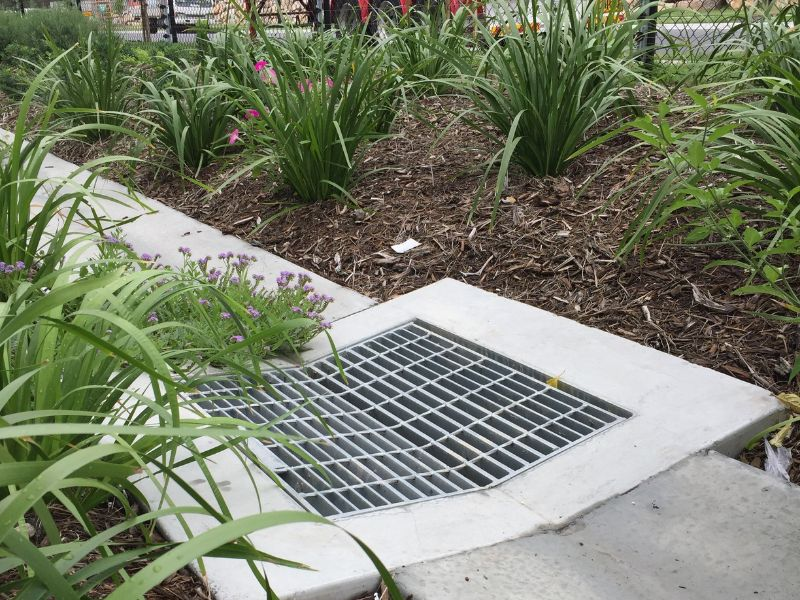
How to solve stormwater problems on sloped blocks
Key takeaways
- Slope affects stormwater behaviour: Runoff accelerates on sloping sites, increasing erosion, scour and pressure on drainage infrastructure and structures.
- Sloped sites need considered drainage design: Concentrated flow paths, reduced infiltration and difficult access can make conventional drainage approaches less effective.
- Multiple drainage measures may be required: Drainage pits, subsurface drainage, swales, terracing and detention systems can work together to capture, slow and safely convey stormwater.
- Product selection matters: Drainage components need to suit hydraulic requirements, site access, installation conditions and applicable load classifications.
- Mascot Engineering supports challenging installations: Mascot’s lightweight GRC drainage products combine strength, durability and easier handling, making them particularly practical where access, excavation and installation conditions are difficult.
Sloped blocks can present complex stormwater challenges across Australian residential, commercial and civil projects. As water travels downhill, its velocity increases, potentially causing erosion, concentrating flows around structures and placing greater demands on drainage infrastructure.
Managing these conditions effectively requires more than simply installing a drain at the lowest point. A well-designed system considers how water enters the site, where it travels, where it can be safely captured and how it will ultimately discharge.
For projects where access, weight and installation conditions are also important considerations, Mascot Engineering manufactures engineered drainage pits using Glass Reinforced Concrete (GRC), providing a strong, lightweight alternative for a wide range of stormwater applications.
Understanding how stormwater behaves on sloped sites
Gravity has a significant influence on stormwater movement. As the gradient increases, runoff generally travels faster and has greater potential to scour soil, damage landscaping and place pressure on downstream drainage infrastructure.
Steeper gradients can also reduce the opportunity for water to infiltrate naturally into the ground. This becomes particularly important on sites with compacted soils, paved areas, driveways, roofs and other impermeable surfaces, where a greater proportion of rainfall becomes runoff.
Natural and constructed features can further concentrate this water. Retaining walls, pathways, driveways and changes in ground level may channel runoff towards particular areas, creating localised drainage problems even where the overall catchment is relatively small.
An effective stormwater strategy therefore starts with understanding:
- Site contours and gradients;
- Catchment areas;
- Natural and constructed flow paths;
- Soil and surface conditions;
- Low points and potential ponding areas;
- Retaining walls, foundations and other vulnerable structures; and
- The location and capacity of the legal point of discharge.
Once these factors are understood, engineers and contractors can determine where surface drainage, subsurface drainage and stormwater collection points are required.
Mascot Engineering’s GRC drainage pits can form part of this system, providing collection points that integrate with pipework and suitable grate configurations across a range of project conditions.
Key challenges that affect stormwater management on sloped blocks
Increased runoff velocity
Water moving across sloping ground can gain velocity quickly. If runoff is allowed to travel unchecked over exposed soil or landscaping, it can cause erosion, scour and gradual deterioration of the surrounding ground.
Higher velocities can also increase the demands placed on downstream pits, pipes and outlets. Drainage infrastructure therefore needs to be appropriately located and sized for the catchment it serves rather than selected solely according to the physical dimensions of the installation area.
Concentrated flow paths
Sloped sites frequently create concentrated drainage paths. Driveways, retaining wall interfaces, paved areas and changes in landscaping levels can effectively funnel stormwater into narrow channels.
These concentrated flows can cause localised erosion and direct significant volumes of water towards buildings or other sensitive areas.
Strategically positioned drainage pits can help intercept these flows and transfer stormwater into a controlled underground drainage network before it reaches vulnerable parts of the site.
Limited surface infiltration
On steep, paved or heavily compacted sites, infiltration may be limited. Instead of soaking into the ground, rainfall becomes surface runoff and travels towards lower elevations.
This can result in pooling at the bottom of slopes, increased demand on drainage infrastructure and additional pressure around retaining structures.
A coordinated drainage design may therefore incorporate both surface collection and subsurface drainage rather than relying on a single measure.
Difficult site access
Slope creates an additional challenge that is sometimes overlooked: installation.
Moving conventional drainage components around steep, constrained or difficult-access sites can add labour and handling complexity. This is one area where Mascot Engineering’s Glass Reinforced Concrete (GRC) construction can provide a practical advantage.
GRC delivers a high strength-to-weight ratio, allowing drainage components to be manufactured with significantly less bulk than traditional concrete alternatives. For contractors working on sloping blocks or sites with restricted machinery access, lighter components can simplify transport, positioning and installation while maintaining the durability required for stormwater applications.
For help matching drainage components to site and project requirements, contact Mascot Engineering for technical support.
Effective stormwater solutions for sloped blocks
There is rarely a single solution to stormwater management on a sloping site. Effective designs typically combine several measures to control runoff at different points across the block.
Depending on the site and engineering requirements, these can include:
- Terracing and stepped landscaping: Breaking a long slope into shorter sections can reduce runoff velocity and help manage erosion.
- Subsurface drainage: Agricultural drains, drainage cells and connected pipework can help manage groundwater and water accumulating behind retaining structures.
- Strategically positioned drainage pits: Pits can capture runoff at low points, changes in grade and other critical collection areas before conveying it into the stormwater network.
- Swales and diversion drains: Shallow channels can intercept and redirect surface water away from buildings and other vulnerable areas.
- Retaining wall drainage: Appropriate drainage behind retaining structures helps manage water accumulation and hydrostatic pressure.
- On-site detention: Where required by the relevant authority, detention systems can temporarily store runoff and control the rate at which it enters downstream infrastructure.
The objective is to manage stormwater progressively across the site rather than allowing runoff to accumulate unchecked at the bottom of the slope.
Mascot Engineering’s drainage pit range can be incorporated at critical collection and junction points within these systems. The lightweight GRC construction is particularly useful where pits need to be positioned in landscaped, elevated or restricted-access areas.
How to design a stormwater system for a sloped block
A successful drainage solution starts with site-specific engineering. While requirements vary between projects and local authorities, the following process provides a useful framework.
Step 1: Map the catchment and flow paths
Identify where stormwater originates and how it naturally travels across the site. Consider roof drainage, paved areas, driveways, landscaped surfaces and adjoining catchments where relevant.
Pay particular attention to locations where runoff converges or accelerates.
Step 2: Identify high-risk areas
Determine which parts of the site require additional protection. These may include:
- retaining walls;
- building footings and foundations;
- garages and basement entries;
- driveways and accessways;
- embankments;
- landscaped areas susceptible to erosion; and
- neighbouring property boundaries.
These locations can help determine where interception drainage or additional collection points are needed.
Step 3: Determine hydraulic requirements
Drainage infrastructure should be sized according to the hydraulic demands of the site.
Relevant factors can include rainfall intensity, catchment area, surface type, slope, anticipated flow rates and the capacity of downstream infrastructure. Where required, these calculations should be completed by an appropriately qualified professional.
Step 4: Specify appropriate pits and grates
Once collection locations and hydraulic requirements are established, suitable pits, grates and associated components can be specified.
Selection should consider more than dimensions alone. Engineers and contractors may also need to assess:
- required pit depth;
- inlet and outlet configuration;
- grate type;
- anticipated loading;
- installation access;
- surrounding surface treatment; and
- applicable standards and authority requirements.
Mascot Engineering offers GRC drainage pits in multiple sizes and configurations, helping specifiers match the drainage component to the application rather than adapting the project around a one-size-fits-all product.
Step 5: Integrate surface and subsurface drainage
Surface and subsurface drainage should operate as a coordinated system.
For example, a swale may direct surface runoff towards a drainage pit, while subsurface drainage behind a retaining wall connects into the broader stormwater network. Using complementary measures can reduce reliance on any single drainage element and provide more effective management across the site.
Step 6: Check compliance and local requirements
Stormwater designs must comply with the requirements applicable to the specific project and location. Depending on the application, this can include the National Construction Code, relevant Australian Standards and local council or authority requirements.
Grates and access covers should also be selected according to the load classification and application requirements relevant to the installation.
Mascot Engineering manufactures access covers and drainage products for Australian infrastructure applications and can assist engineers, contractors and specifiers with product information, drawings and selection.
For project-specific assistance, contact Mascot Engineering’s technical team.
Why GRC Drainage Pits make dense on difficult sloped sites
Material selection can have a significant impact on installation, particularly when drainage infrastructure needs to be moved down narrow side accessways, positioned on steep terrain or installed where lifting equipment cannot easily operate.
This is where Mascot Engineering’s experience with Glass Reinforced Concrete becomes particularly relevant.
GRC combines cement-based materials with glass fibre reinforcement to create components with a high strength-to-weight ratio. For drainage applications, this provides several practical benefits:
- Lower component weight: Easier handling can be valuable on steep and restricted-access sites.
- Strength and durability: GRC is designed for demanding civil and construction environments.
- Corrosion resistance: Unlike metallic components, the GRC pit body does not rely on steel reinforcement that can be vulnerable to corrosion.
- Installation flexibility: Lighter components can reduce some of the handling and lifting challenges associated with conventional precast concrete products.
- Australian-made expertise: Mascot Engineering has extensive experience manufacturing GRC products for Australian building, civil and infrastructure projects.
The result is a drainage solution that addresses not only hydraulic requirements but also some of the practical challenges contractors face when installing stormwater infrastructure on difficult sites.
Choosing the right drainage products for a sloped site
Effective stormwater management on a sloped block depends on getting both the system design and individual components right.
The appropriate solution will vary according to catchment size, gradient, soil conditions, expected flows, downstream capacity, loading requirements and site access. In many cases, a combination of surface controls, subsurface drainage and strategically positioned pits provides the most effective approach.
Product selection should then support that design.
Mascot Engineering’s lightweight GRC drainage pits are designed to provide durable stormwater collection solutions while offering practical handling advantages on sites where access or installation conditions are challenging. With a range of pit sizes, grate options and associated components available, Mascot can help engineers, contractors and specifiers identify a solution suited to the project.
Explore Mascot Engineering’s drainage pit range or contact the Mascot Engineering team for product selection, technical information and project-specific support.