
Multi Part Infill Covers (Gastight)
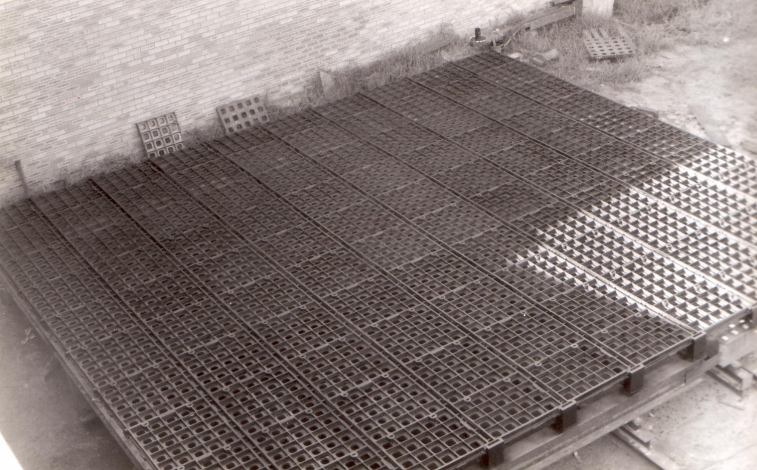
Multipart units combine standard size covers in multiple rows, generally when the clear opening exceeds 1200mm in both directions.
There are 1000’s of combinations available, the following pages provide the most common sizes and load requirements. If the size you require does not appear here, please call our technical team on 1300 885 295. Mascot Engineering will design your multipart and provide the relevant engineering support as needed.
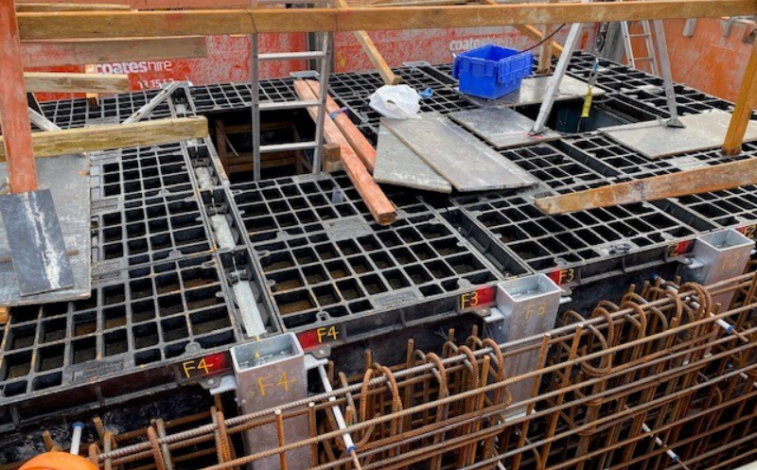
Mascot Engineering’s system relies on a number of ‘rows’ of covers divided by fixed or removable beams to achieve the desired clear opening. The beam size will depend upon the load rating as well as the beam’s length. In all cases unless requested, beams are supplied cut to length and galvanised.
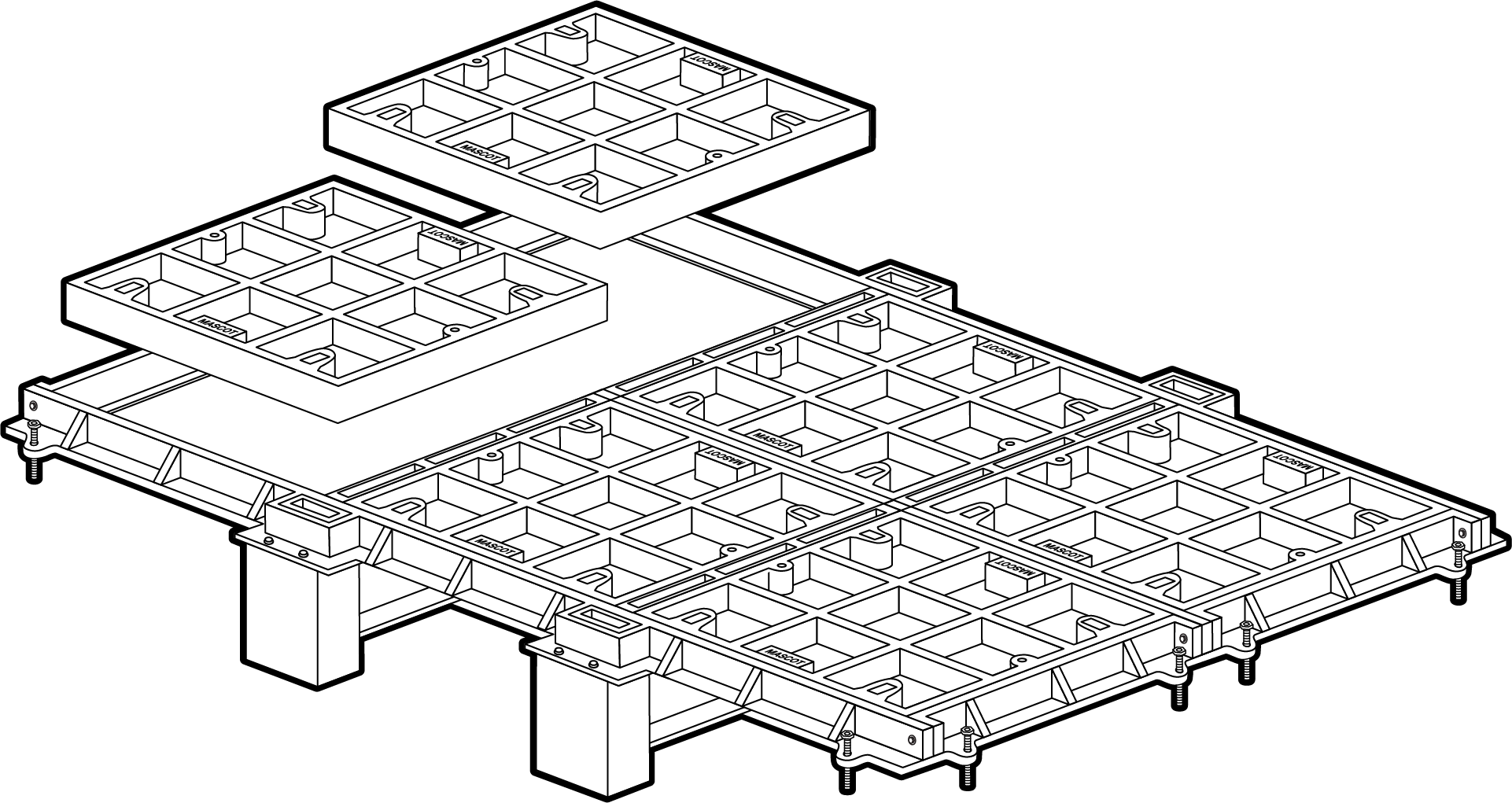
Made for you
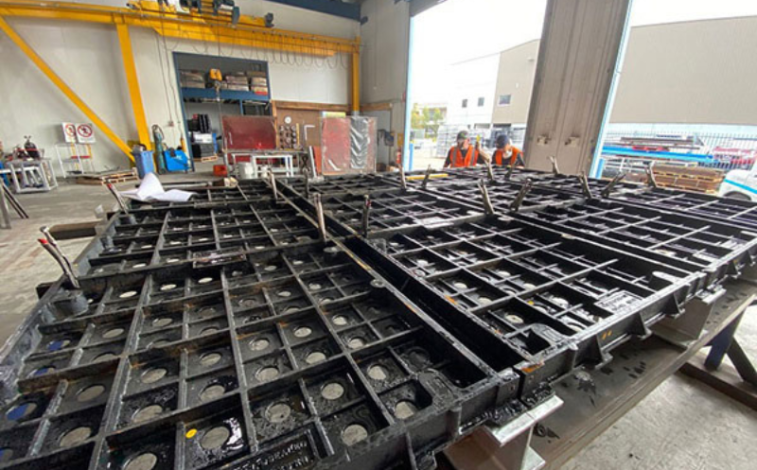
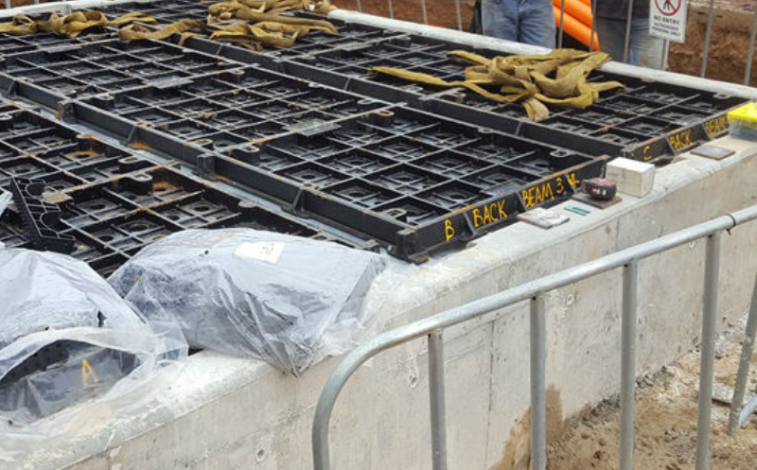
Using standard covers, all multiparts are assembled in our facility and checked for accuracy of fit and marked to assist re-assembly. They are pulled down and carefully prepared for transport to site. Please note, where possible the multiparts will be supplied/delivered assembled – this service will depend on overall size of the multipart, it’s weight and it’s destination.
Rebate details
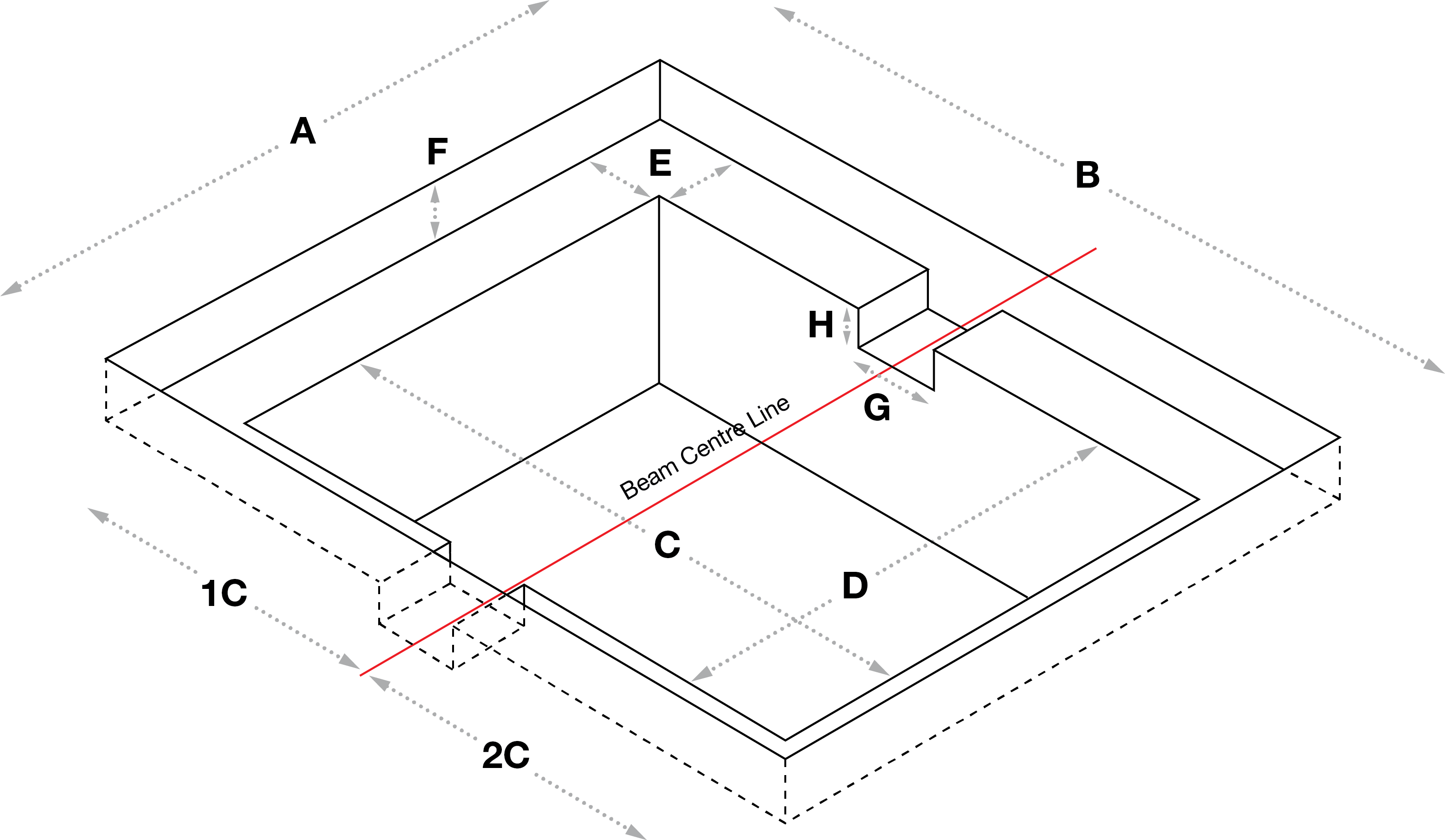
The below table and illustration shows the height and seating depth as well as the width and height of the beam pocket that should be allowed for on-site.
When planning rebates (and prior to construction), we recommend you discuss your requirements with our technical team to ensure the information provided here is relevant to your multipart.
Note: our Class D, Class E & Class G covers are evolving with additional sizes and improvements to handling and installation. Please discuss your multipart product with our technical team before forming a rebate on site.
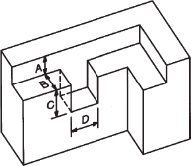
| Class | A | B | C | D |
|---|---|---|---|---|
| B | 75 | 100 | 100 | 150 |
| D | 100 | 150 | 150 | 225 |
| E-F-G | 125 | 200 | 300 | 250 |
How to choose a Multipart
Assuming you require an opening of approximately 2000mm x 2000mm in an area with only pedestrian loads or occasional light vehicle access. After consulting the following charts, a B1113 with an internal clear opening of 2060mm x 2040mm is chosen.
Next we can determine that a B1113 has two beams with a beam spacing of 660mm, 720mm and 660mm. If you add these three dimensions together, you can see that the clear opening perpendicular to the beam is the 2040mm dimension. Therefore the beams span the 2060mm distance.
Multi Part Infill Covers

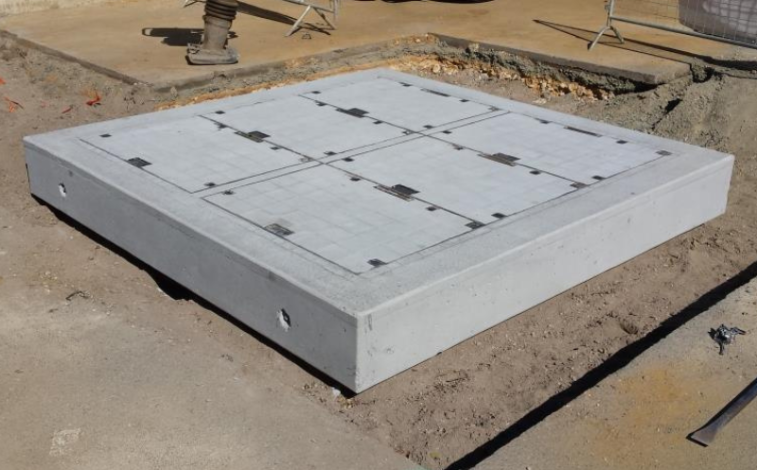
About Multi-Part Infill Covers (Gastight)
Large utility pits, wastewater assets and high traffic infrastructure across Australia require access systems that remain secure, stable and sealed over time. When odour control, gas containment and reliable load performance are essential, gas and airtight multipart access covers provide a practical solution for openings too large for a single lid. These systems support safe access while maintaining the protection needed for complex civil and municipal environments.
Mascot Engineering manufactures gas- and airtight infill cover assemblies designed for long-term performance in Australian conditions. Assembled locally and compliant to AS3996, these infill access covers integrate with surrounding structures, including pits and accessories and adjoining access covers, giving engineers and contractors durable systems that are straightforward to specify, install and maintain.
Understanding Multi-Part Infill Systems
Multipart access covers are used when an opening is too large for a single lid to span safely. By dividing the cover into multiple segments supported by beams and a rigid frame, the system maintains structural strength while still allowing controlled access for inspection and maintenance. This approach is common in wastewater networks, pump stations and large utility chambers as seen in data centres.
Many installations pair these assemblies with GRC pit structures, which help reduce handling weight and improve corrosion resistance. Together, infill access covers and lightweight pit systems support efficient installation while maintaining long-term performance and reliability.
System Types and Configurations
Single-row and multi-row assemblies
Single row layouts are used for medium-sized openings that require multiple lids but do not need full multi-directional support. They provide clear access while keeping lifting weights manageable.
Larger chambers, utility corridors or wastewater structures often require multi-row assemblies, where several lids span across beams to cover wider areas. This format allows engineers to design openings to the size they need without being restricted by standard cover dimensions. Multi-row systems also support staged access, making maintenance easier in complex service environments.
Beam and frame support systems
Beam systems provide the structural backbone for multipart access covers. Galvanised beams can be fixed or removable depending on the maintenance needs of the site. Their role is to distribute loads evenly across lids and frames, helping the system achieve the required AS3996 load class.
Frames are designed to seat lids securely and maintain alignment over time, supporting safe access even in high-traffic areas. Together, beams and frames provide long-term stability for both infill and surface-mounted systems.
Gastight and airtight sealing options
Projects requiring odour or gas control use a gas- and airtight infill cover solutions. These systems are selected for sewer networks, pump stations and enclosed public areas where vapour management is essential. Precision sealing surfaces ensure lids sit correctly, controlling emissions while still allowing routine inspections.
Trafficable and non-trafficable configurations
Multipart access covers are engineered to achieve the required AS3996 compliant load classes across a range of environments. The combination of beams, frames and reinforced lids ensures stable seating and predictable behaviour under repeated loading. Different load classes apply depending on the environment. Class B covers suit landscaped or pedestrian zones, while Class D and G are used where vehicles or industrial equipment operate. Heavy-duty sites benefit from the durability of airtight infill access cover assemblies that maintain performance under repeated loading.
Installation and Handling Guidance
Successful installation ensures that multipart access covers perform reliably over their full service life. Each stage of the process supports structural stability, correct sealing and safe future access for maintenance teams. Clear preparation and careful alignment help the system achieve its intended load rating and sealing capability.
Every project and installation is unique. You will receive a customised installation instruction manual from the Mascot team to ensure that your multipart is installed exactly as specified in accordance with the requirements of the application and other environmental factors.
Applications Across Industries
Infill access covers serve a wide range of civil, commercial and municipal environments where safe access, reliable sealing and durable structural performance are essential. Their modular format and ability to accommodate large or irregular openings make them suitable for both new infrastructure and upgrade works. The examples below highlight the types of projects where multipart access covers and sealed assemblies are commonly specified.
- Wastewater and sewer networks: odour and gas control for pump stations, treatment facilities and major utility chambers.
- Municipal infrastructure: sealed access points for service corridors, stormwater assets and below-ground service rooms.
- Industrial facilities: durable covers for processing plants, refineries and manufacturing sites that require controlled access and reliable sealing.
- Transport and road projects: strong assemblies for trafficable areas, including intersections, service routes and road reserve installations.
- Commercial basements and enclosed spaces: gas- and airtight infill cover systems used where odours or vapours must not enter occupied areas.
Across these applications, project teams rely on systems that offer predictable long-term behaviour, support straightforward maintenance and maintain safety for both workers and the public. Whether installed in high-traffic zones or sensitive enclosed environments, the airtight infill access cover plays a critical role in protecting assets and ensuring ongoing operational performance.
Why Choose Mascot Engineering for Multipart Access Covers
Selecting the right supplier is just as important as choosing the correct multipart access covers for a project. Mascot Engineering supports civil, municipal and industrial works with dependable systems that maintain structural stability and sealing performance in demanding environments.
Here is why engineers, contractors and councils choose Mascot:
- Proven experience in manufacturing infill access covers and large span access solutions for complex sites.
- Coordinated systems that integrate with pits and accessories, access covers and related drainage structures.
- Products designed to comply with the load ratings as set out in AS3996, with ISO certified processes supporting consistent quality.
- Local assembly and support that ensures a reliable supply and straightforward communication.
- Technical support for layout, detailing and integration with adjoining channel systems.
From wastewater assets to major infrastructure upgrades, Mascot’s sealed assemblies, including every gas- and airtight infill cover, deliver long-term durability and predictable performance across all project stages.
FAQs
Q1. What are multipart access covers?
Multipart access covers are multi-lid assemblies for large or irregular openings where a single cover cannot span safely. They improve load distribution, lifting efficiency and long-term access for maintenance teams.
Q2. When should infill access covers be used?
Infill access covers are selected when the surface needs to blend with surrounding pavement materials. They offer a neat, integrated finish while maintaining strong structural performance across civil and municipal applications.
Q3. When is a gas- and airtight infill cover required?
A gas- and airtight infill cover is used in wastewater, sewer or enclosed areas where odour and gas containment is essential, protecting surrounding environments while still allowing maintenance access.
Q4. What load class should be specified for these systems?
Class B suits pedestrian areas, while Class D to G are used for vehicle zones, industrial sites or infrastructure where stronger structural performance is needed.
Q5. Can these systems be customised for non-standard openings?
Yes. Multi-row layouts, beam spacing and lid sizes can be tailored to suit unique chambers, utility corridors or large pit structures requiring precise access control.
Q6. Are multipart systems compatible with GRC pits?
Yes. They integrate effectively with GRC pits, providing reduced handling weight, corrosion resistance and stable long-term performance in demanding service environments.
Q7. Do you provide technical drawings?
Yes. CAD files, specification sheets and installation details are available to support engineers, designers and contractors during planning and construction.